Security is architecture, not a checkbox
Row-level database isolation, SSO, audit trails, on-call schedules, and multi-level escalation. Built into the foundation, not bolted on after the fact.
Security and isolation
Enterprise customers need more than passwords and permissions. They need architectural guarantees.
Row-level security
Every database query is scoped by tenant at the PostgreSQL level using RLS policies. Data isolation isn't application logic -- it's enforced by the database engine itself.
SSO via OIDC
Agents authenticate through your identity provider. Configure OIDC with your IDP URL, client ID, and secret. Automatic account creation on first SSO login.
Complete audit trail
Every ticket status change, priority update, assignment, tag modification, and SLA breach is recorded with timestamp and actor. Immutable, queryable, exportable.
Project isolation
Separate tickets, channels, tags, SLA policies, knowledge bases, and AI configuration per project. Teams supporting multiple products operate independently within one tenant.
Role-based access control
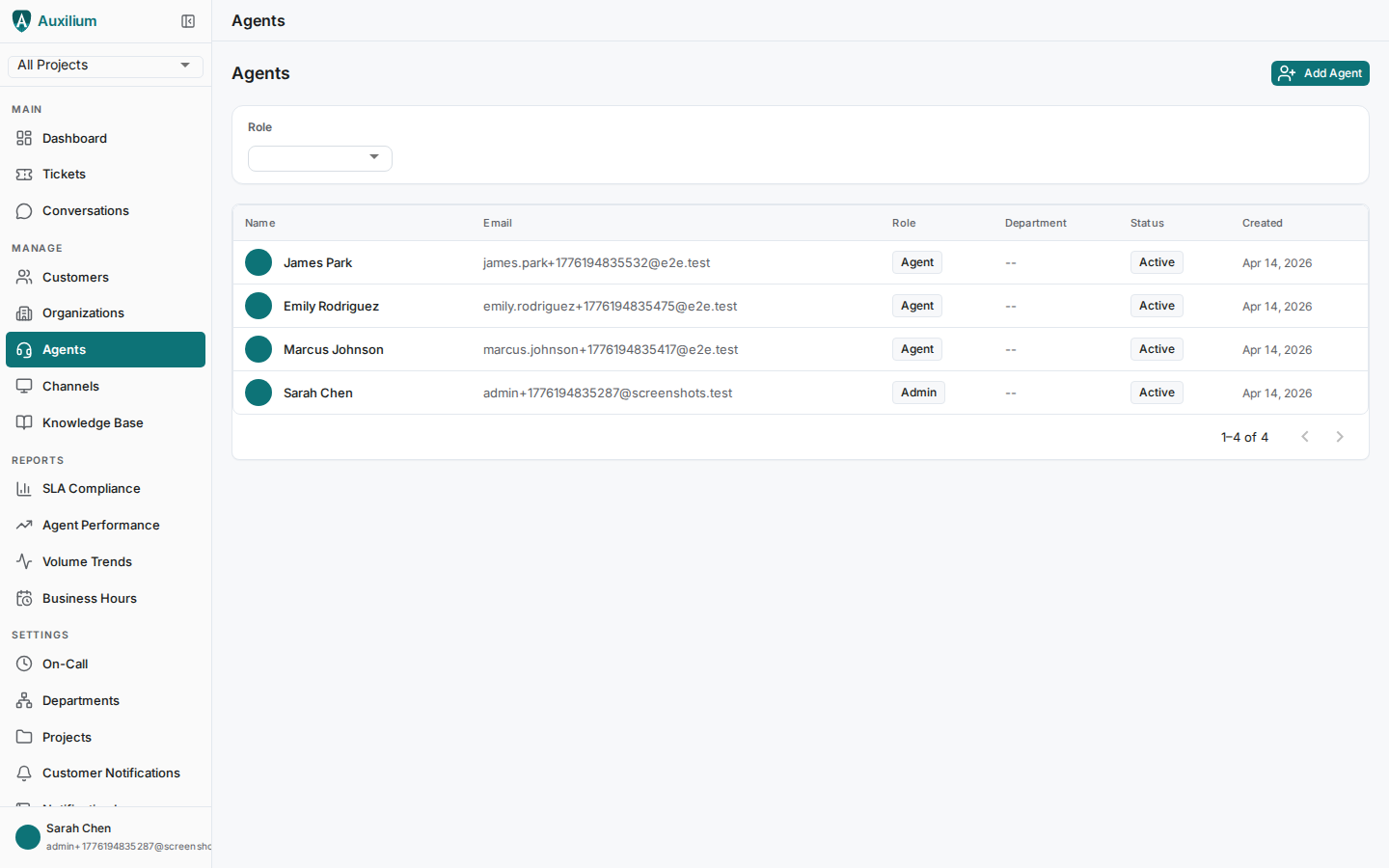
Three agent roles (admin, manager, agent) with scoped permissions. Customer organization roles (owner, admin, member) for B2B portal access.
Notification delivery log
Track every notification attempt: recipient, event type, channel, delivery status, and error details. Full visibility into what was sent and whether it was delivered.
Database-level data isolation
Osewa uses PostgreSQL row-level security policies to enforce tenant isolation at the database engine level. Every query is automatically scoped by the authenticated tenant's ID. There is no application-level code path that can accidentally leak data between tenants.
- RLS policies on every tenant-scoped table -- enforced by PostgreSQL
- Tenant ID set per-request from JWT claims, not query parameters
- Write policies require exact tenant match -- no cross-tenant writes
- Integration tests verify tenant isolation with real database queries
Operational maturity
Tools for teams that run support as a 24/7 operation.
On-call schedules
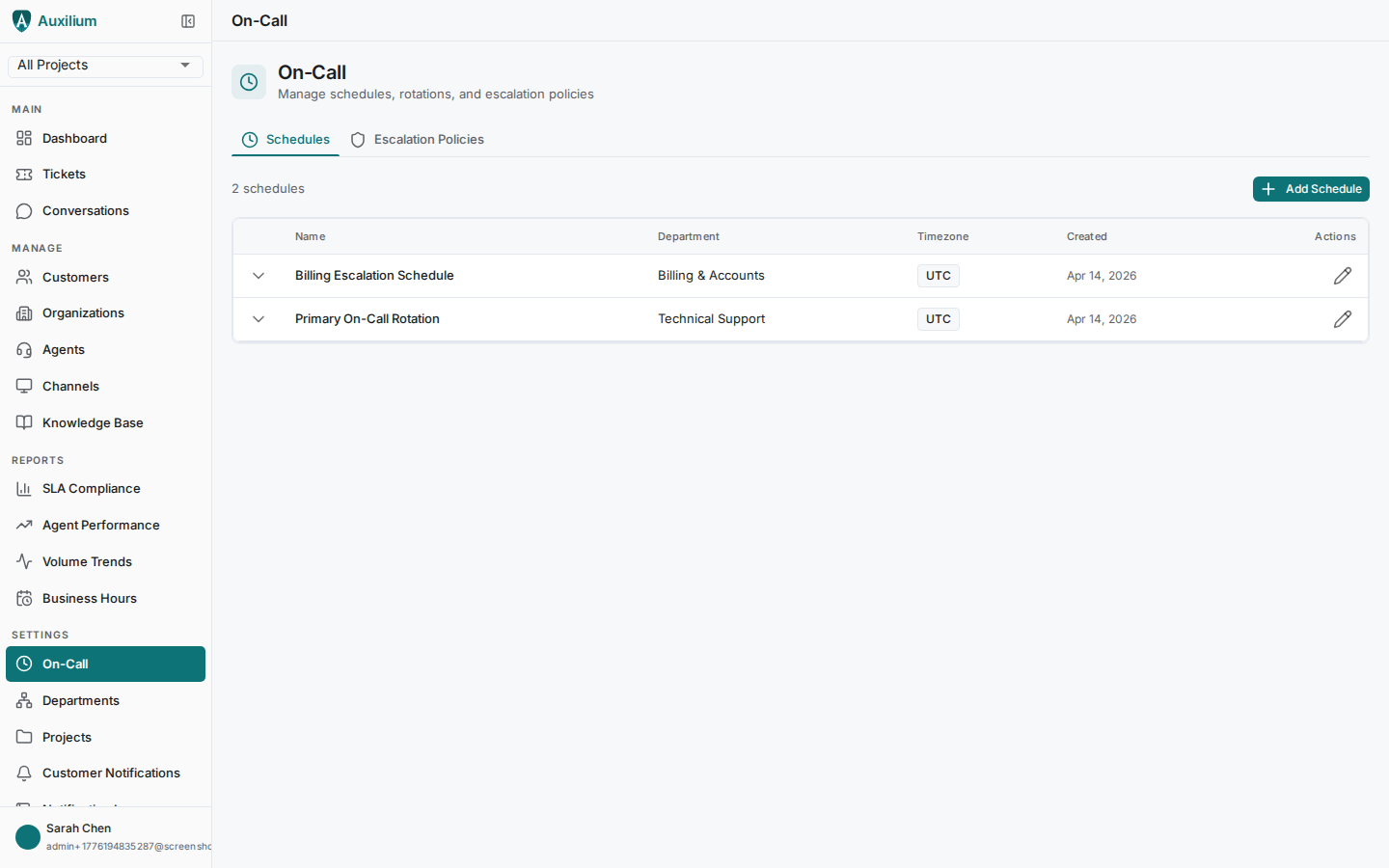
Define recurring on-call rotations per department with IANA timezone support. Manage shifts, add rotations, and ensure 24/7 coverage.
Escalation policies
Multi-level escalation chains per department. Each level defines a target (agent or department), timeout, and notification channels. Automatic escalation when unacknowledged.
Business hours
Define working hours per day of week with timezone support. SLA timers only count business hours. Reusable across multiple SLA policies.
Department hierarchy
Organize agents into departments with parent/child relationships. Route tickets to departments, assign escalation policies, and manage on-call per department.
Tickets never get stuck
Define multi-level escalation chains per department. When a ticket goes unacknowledged, Osewa automatically escalates through your chain -- notifying the next level via email, Slack, or in-app.
- Multi-level chains: L1 agent -> L2 team lead -> L3 department head
- Configurable timeout per level (minutes)
- Notification via email, Slack, or in-app per escalation level
- On-call schedules ensure someone is always available